“It is not the consciousness of men that determines their being, but their social being that determines their consciousness.”
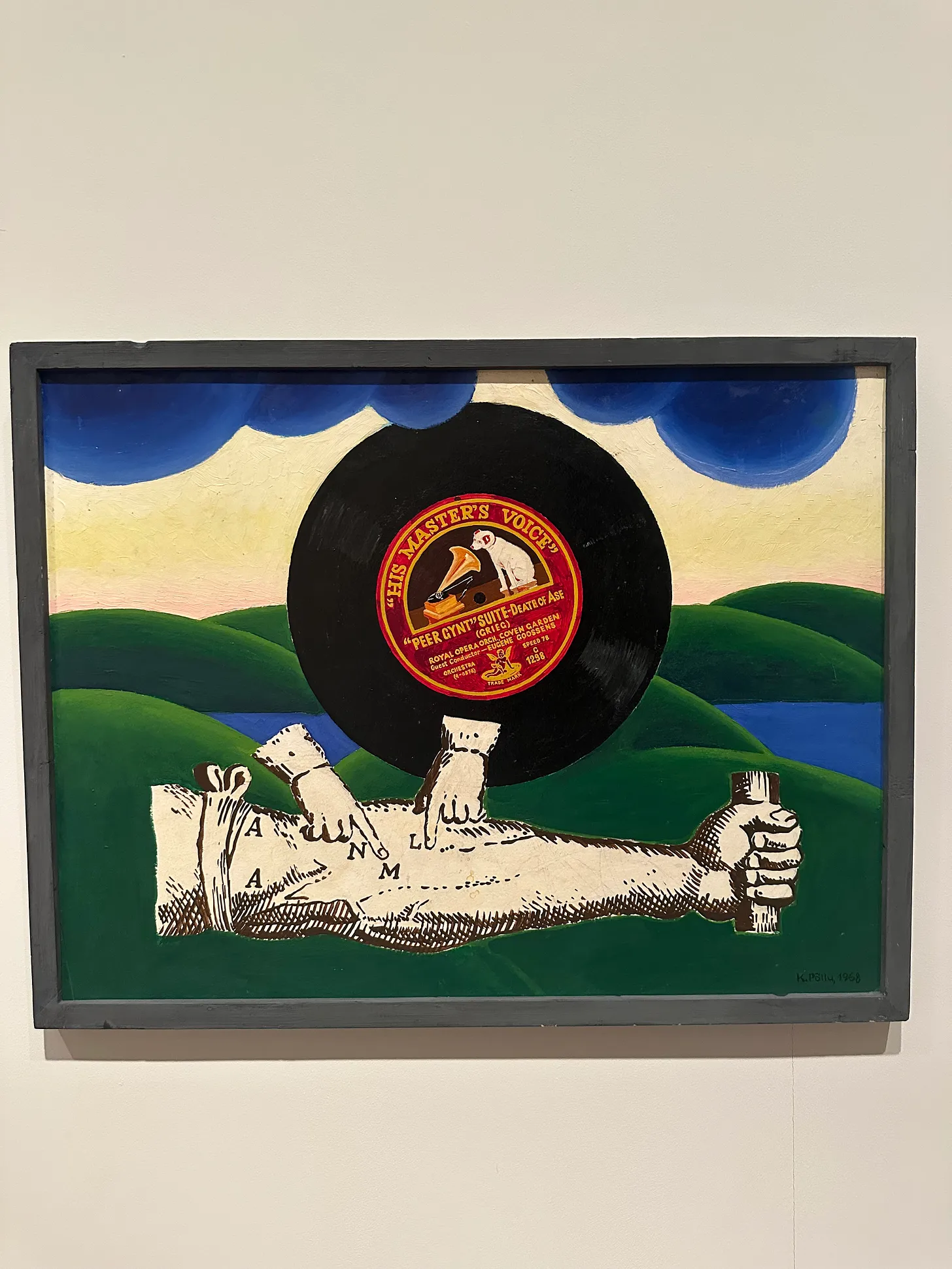
Karl Marx determined that it is not ourselves that manifest our own consciousness. But instead, it is the institutional mainframes that surround us that determine our consciousness. Põllu’s Sadness highlights this antagonism, confronting the binaries of liberalism and authoritarianism against one another.
Põllu’s work was born during the period of the Soviet occupation of Estonia; a period marked by ideological surveillance, censorship and the suppression of national and individual expression. But the antagonism that we see in this piece is a double entendre – one that confronts both liberalism and authoritarianism simultaneously. Whilst it directly critiques authoritarian control, it also implicates liberal capitalism, revealing how both systems manufacture consciousness through different modalities of conditioning.
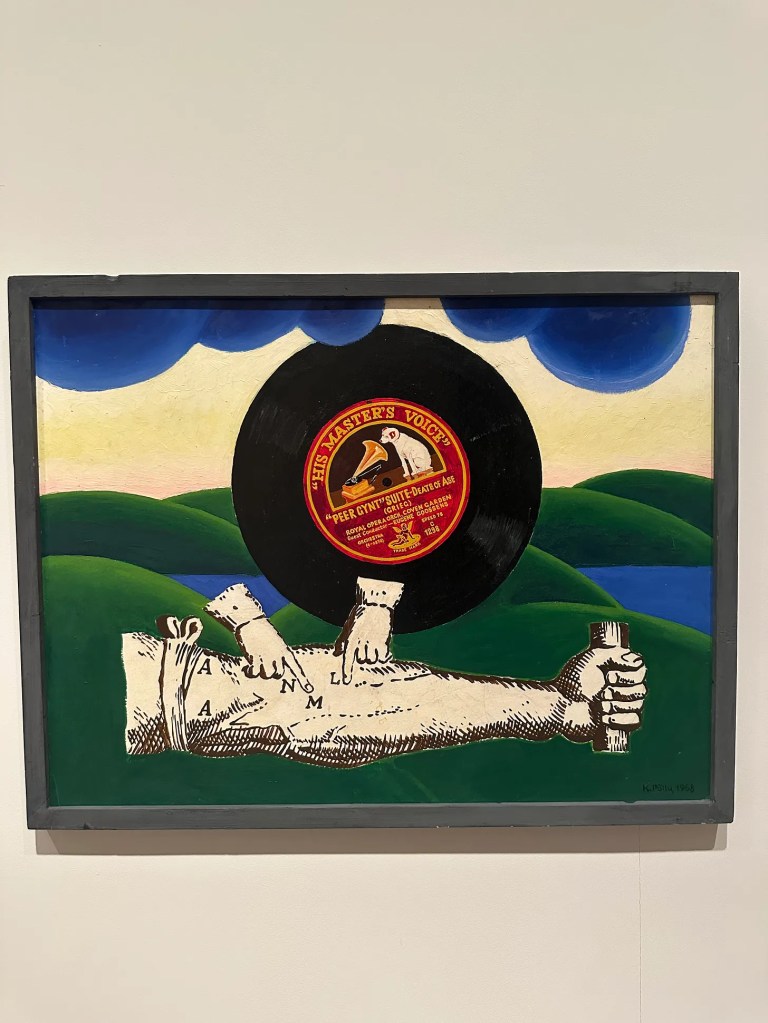
At its core, what is communicated in this piece, despite the regimes in which we exist, our consciousness is never sovereign; it is produced. A product of the institutional realities in which we inhabit. What we see across the picture plane is a vinyl inscribed with “His Masters Voice”. This echoes the propaganda models pursued by the Soviets, yet it also references a Western music label that evokes the seductive machinery of capitalist media. A duality. The vinyl appears to have hands which are massaging specific points on the arm. As if the music being played, or “His Masters Voice”, knows exactly what to say and when to say it. In a word, conditioning. It is a metaphor for how mass culture and political messaging infiltrate the nervous system, turning human sensitivities into a site of conditioning.
This conditioning holds a duality. That both capitalist and authoritarian systems of control condition their subjects in their own ways. Albeit the way in which this conditioning manifests is simply marketed and sold differently. Returning to the piece’s namesake, Sadness, perhaps Põllu was confronting the reality that we aren’t free under either regime type. Echoing the claim made by Rousseau, “Man is born free, but everywhere he is in chains”. This Sadness that Põllu communicates is one that could well characterise all our entire existences, the realisation that our supposed liberation, too, may in fact be another form of captivity.
Disclaimer:
Everything written here is my own reflection — imperfect, interpretive, and open to disagreement. Nothing is meant to offend or exclude anyone. Art invites feeling and thought in equal measure; what’s offered here is simply one person’s encounter with it.